
Anaemia is a condition that is marked by low levels of haemoglobin in the blood. Iron is a key component of haemoglobin, and iron deficiency is estimated to be responsible for half of all anaemia globally. The optimal haemoglobin concentration needed to meet physiological needs varies according to age, sex, smoking & alcohol, altitude, food habits and pregnancy status.
Global Scenario
Anaemia is a serious public health problem across the Globe that particularly affects young children and pregnant women. World Health Organisation estimates that 42% of children less than 5 years of age and 40% of pregnant women worldwide are anaemic.
Indian Scenario
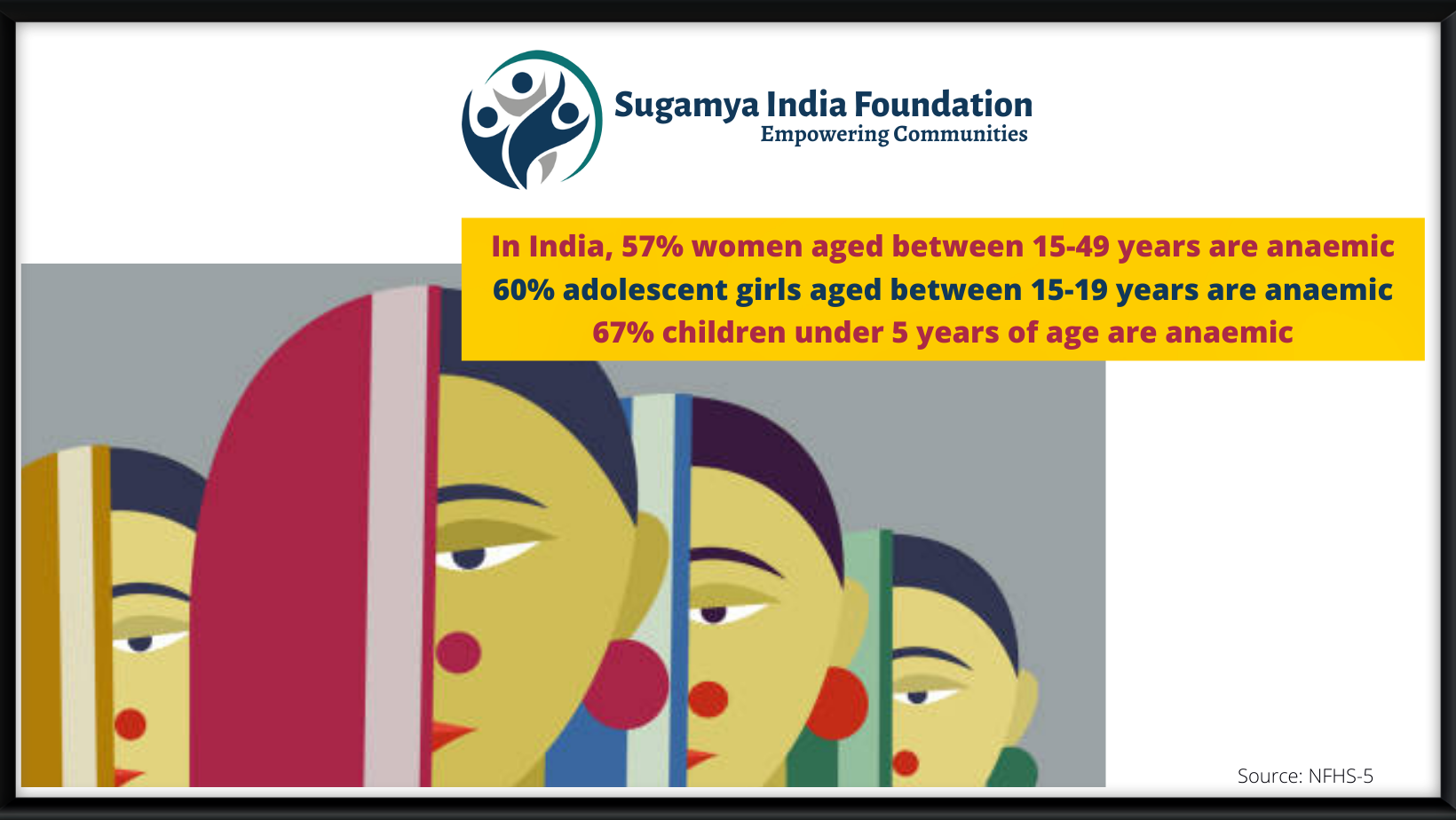
In India, more than half of the population among women are anaemic and it was observed that, among them 52% were pregnant and 61% were breastfeeding. Prevalence of anaemia was found to be 25% among men aged between 15-49 years.
Anaemia is a serious concern for children because it can impair cognitive development, stunt growth, and increase morbidity from infectious diseases. According to NFHS-5 conducted in 2019, 67% children had anaemia (haemoglobin levels below 11.0 g/dl). The prevalence of anaemia among children Under-5 years of age is highest in Gujarat (80%), followed by Madhya Pradesh (73%), Rajasthan (72%) and Punjab (71%).
Most common causes of anaemia:
- Nutritional deficiencies like iron deficiency, vitamin deficiencies like folate, Vitamin A and Vitamin B12
- Haemoglobinopathies like sickle cell disease and thalassemia
- Infectious diseases like malaria, tuberculosis, HIV and parasitic infections
Symptoms:
- Pale skin and conjunctiva
- Fatigue
- Weakness & dizziness
- shortness of breath
Factors affecting anaemia:
- Anaemia is more prevalent among children under 3 years of age than older children, with a peak prevalence of 80% observed among children aged 12-17 months
- Prevalence of anaemia increases with increasing birth order of children and is higher among the children of anaemic mothers.
- The prevalence of anaemia declines as the mother’s schooling and household wealth increase.
Prevention:
- Iron and Folic acid supplementation
- Exclusive Breastfeeding
- Improved hygiene and sanitation
- Deworming
- Food Fortification and Diet diversity
- Iron rich food intake with Vitamin C
- Ensure birth spacing and use of contraceptives
- Avoid tea and coffee
- Say NO to smoking and alcohol
(Visit your nearest health centre or nearest Anganwadi centre/ASHA for more information)
(Source: NFHS-5)